Marketing technology is moving past isolated tools and toward unified, privacy-forward systems that put the customer at the center.
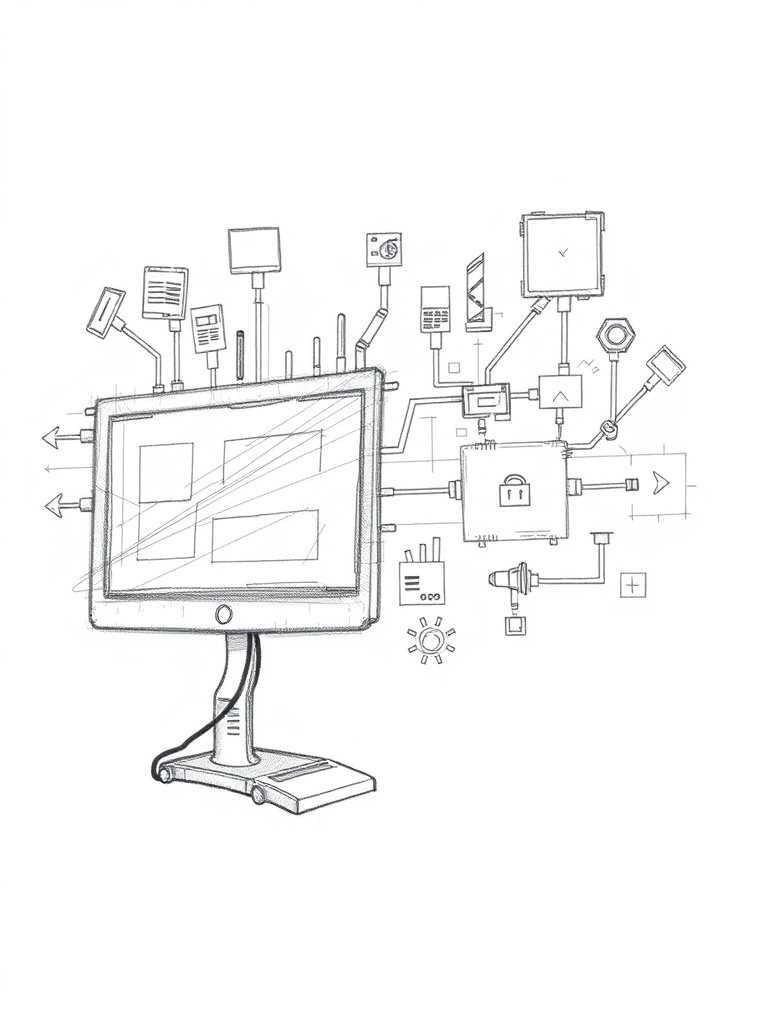
Brands that prioritize clean data, real-time orchestration, and measurable outcomes will outpace competitors and deliver better customer experiences across channels.
Key trends shaping MarTech adoption
– First- and zero-party data strategies: With less reliance on third-party signals, collecting customer-provided preferences and behaviors through interactive experiences and loyalty programs is essential. These direct signals fuel personalization while respecting consent.
– Customer data platforms (CDPs) and composable stacks: CDPs remain the hub for identity resolution and activation.
Modern marketing stacks favor composability—best-of-breed services connected through APIs—so teams can swap vendors without rebuilding workflows.
– Privacy-first measurement and attribution: Privacy regulation and browser changes require new approaches to performance measurement. Privacy-preserving measurement techniques, curated data clean rooms, and server-side tagging help maintain attribution accuracy while honoring user choices.
– Real-time orchestration and automation: Orchestrating consistent messages across web, mobile, email, and in-store touchpoints improves conversion and retention. Automated decisioning systems enable timely offers, lifecycle messaging, and dynamic creative delivered at the right moment.
– Creative and asset automation: Dynamic creative optimization and asset management streamline personalization at scale, enabling variations of messaging and imagery targeted to segments without manual production bottlenecks.
Practical steps to modernize your MarTech stack
1. Audit your data flows: Map where customer data is collected, stored, and used. Identify gaps, duplicate sources, and latency issues that affect personalization and reporting.
2. Centralize identity: Implement a CDP or unified identity layer that reconciles identifiers (email, device, CRM ID) and creates a single customer view for activation across channels.
3. Prioritize consent and governance: Deploy consent management, role-based access controls, and clear retention policies.
Make opt-in choices visible and actionable to customers.
4. Embrace composable architecture: Favor modular vendors with solid APIs and native integrations. This reduces lock-in and makes it easier to innovate or replace components.
5. Invest in measurement that respects privacy: Use aggregated measurement, cohort analysis, and secure clean rooms to analyze performance without exposing raw user-level data.
6. Optimize for speed and automation: Streamline campaign orchestration and automate repetitive workflows.
Focus human effort on strategy and creative direction rather than manual tag or segment management.
Common pitfalls to avoid
– Over-investing in tools without people or processes to use them. Technology without governance and training quickly becomes shelfware.
– Chasing every new feature from vendors instead of solving prioritized business problems. Start with use cases that move key metrics.
– Ignoring latency and data quality. Real-time personalization depends on timely, accurate signals; stale or fragmented data erodes trust and effectiveness.
Measuring success
Define a small set of KPIs tied to business goals—customer lifetime value, retention rate, conversion lift, and cost per acquisition. Use experiment-driven testing to validate the impact of personalization and orchestration changes. Track operational metrics, too, such as campaign launch time and data freshness, to measure platform efficiency.
The path forward
Marketing technology should enable relevance at scale while maintaining customer trust. By consolidating identity, adopting a composable approach, and building privacy-first measurement, teams can deliver more meaningful experiences and demonstrable ROI. Start with a focused pilot, prove impact, then scale capabilities across the organization.